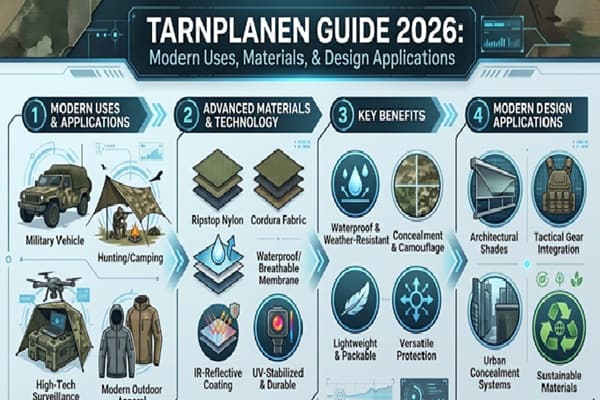
A simple sheet of fabric can change how a space feels, how it functions, and even how long it lasts. That is the idea behind Tarnplanen. It is not just a cover or a tarp. It is a practical design element that blends protection, durability, and visual appeal in one solution.
Tarnplanen has gained attention among homeowners, outdoor enthusiasts, and designers who want materials that work hard without looking out of place. It brings together strong construction and natural aesthetics, making it useful across homes, gardens, construction sites, and creative outdoor setups.
This guide explains Tarnplanen in full detail. It covers what it is, where it came from, how it works, and how you can use it in real life without confusion.
What Tarnplanen Really Means
Tarnplanen is a type of heavy duty covering material designed to protect surfaces from weather, dust, and damage. The word itself is often linked to camouflage style coverings, but modern Tarnplanen goes far beyond military use.
It is now widely used in residential and commercial spaces. The design focuses on strength and adaptability. It can be used as a roof cover, ground sheet, wall barrier, or even a decorative outdoor layer.
What makes Tarnplanen different from regular tarps is its balance between function and design. It is not just made to cover something. It is made to fit into an environment without looking harsh or out of place.
The Origin and Evolution of Tarnplanen
Tarnplanen started as a functional material used in rugged environments. Early versions were mainly used in military and survival situations where protection from rain and sun was critical.
Over time, manufacturers improved the material. They introduced better fabrics, stronger stitching, and weather resistant coatings. This made Tarnplanen more reliable and long lasting.
Designers then began to see its potential beyond survival use. They started using it in gardens, patios, and outdoor seating areas. The natural tones and textured surfaces made it blend well with surroundings.
Today, Tarnplanen is used in both practical and creative ways. It is as common on a construction site as it is in a stylish outdoor café.
Materials Used in Tarnplanen
The strength of Tarnplanen comes from the materials used in its construction. Most Tarnplanen sheets are made from polyethylene, canvas, or PVC coated fabrics.
Polyethylene Tarnplanen is lightweight and water resistant. It is easy to handle and works well for temporary setups.
Canvas Tarnplanen offers a more natural look. It is breathable and often used in garden or decorative settings.
PVC coated Tarnplanen is the most durable. It can handle heavy rain, strong winds, and long exposure to sunlight without breaking down.
Each material has its own use case. Choosing the right one depends on how and where you plan to use it.
Key Features That Make Tarnplanen Stand Out
Tarnplanen is known for its durability. It can withstand rough weather conditions without tearing easily. This makes it ideal for long term outdoor use.
Water resistance is another major feature. It protects surfaces from rain and moisture, keeping items underneath safe and dry.
UV resistance helps prevent damage from sunlight. This is important for areas with strong sun exposure.
Many Tarnplanen products also include reinforced edges and metal eyelets. These features make it easier to secure the sheet firmly in place.
Flexibility is another advantage. You can fold, stretch, or adjust it based on your needs.
Common Uses of Tarnplanen
Tarnplanen is used in many different ways depending on the situation.
In construction, it is used to cover materials and protect them from rain and dust. Workers also use it as temporary roofing.
In homes, Tarnplanen is often used in gardens or balconies. It can act as a shade cover or rain barrier.
Outdoor event planners use Tarnplanen to create covered spaces. It helps protect guests from weather changes.
Campers and trekkers use it as ground sheets or emergency shelters. It is easy to carry and quick to set up.
Farmers use Tarnplanen to protect crops, equipment, and storage areas.
Tarnplanen in Modern Design
Designers have started using Tarnplanen in creative ways. It is no longer just a protective layer.
In outdoor seating areas, Tarnplanen can act as a stylish canopy. It provides shade while adding a natural look.
Some designers use it as wall coverings or partitions. This creates flexible spaces that can be changed easily.
In eco friendly homes, Tarnplanen is used as a sustainable material. It reduces the need for permanent structures and allows for adaptable design.
Its ability to blend into natural surroundings makes it a favorite for landscape design.
How to Choose the Right Tarnplanen
Choosing the right Tarnplanen depends on your needs.
If you need something lightweight for short term use, polyethylene is a good option.
For long term outdoor setups, PVC coated Tarnplanen is more reliable.
If appearance matters, canvas Tarnplanen offers a better visual appeal.
You should also consider size, thickness, and weight. A thicker sheet provides more durability but may be harder to handle.
Check for reinforced edges and strong eyelets. These features improve stability and lifespan.
Installation and Setup Tips
Setting up Tarnplanen is simple, but doing it correctly makes a big difference.
Start by measuring the area you want to cover. This helps you choose the right size.
Use ropes, hooks, or bungee cords to secure the Tarnplanen. Make sure it is tightly fixed to avoid movement in strong winds.
Keep a slight slope if you are using it as a roof. This allows water to flow off instead of collecting on top.
Avoid sharp edges or rough surfaces that can damage the material.
Regularly check the setup to ensure it stays secure.
Maintenance and Care
Tarnplanen does not require heavy maintenance, but basic care helps extend its life.
Clean it with water and mild soap to remove dirt and stains. Avoid using harsh chemicals.
Store it in a dry place when not in use. Folding it properly prevents damage.
Check for small tears or weak spots. Repair them early to avoid bigger problems.
Proper care ensures that your Tarnplanen lasts for years.
Advantages of Using Tarnplanen
Tarnplanen offers a strong mix of durability and flexibility. It can handle tough conditions while remaining easy to use.
It is cost effective compared to building permanent structures. This makes it a practical choice for temporary or adjustable setups.
Its versatility allows it to be used in many environments, from homes to industrial sites.
The natural design options make it suitable for aesthetic use as well.
Also Read : Wifekivers Explained: Meaning, Relationship Values, and Why It Is Trending
Limitations to Keep in Mind
No material is perfect, and Tarnplanen also has some limitations.
Lower quality sheets may wear out quickly. It is important to choose a reliable product.
Improper installation can reduce its effectiveness. Loose setups can lead to damage in strong winds.
Some materials may not be breathable, which can cause moisture buildup underneath.
Understanding these limits helps you use Tarnplanen more effectively.
Why Tarnplanen Is Gaining Popularity
People are looking for solutions that are both practical and flexible. Tarnplanen fits this need well.
It allows quick setup and removal, making it ideal for changing environments.
Its ability to combine function with design makes it appealing to both users and designers.
As more people focus on outdoor living and adaptable spaces, Tarnplanen continues to grow in demand.
Final Thoughts
Tarnplanen is more than just a covering sheet. It is a smart solution that adapts to different needs and environments.
From protecting materials to creating stylish outdoor spaces, it offers a wide range of uses.
With the right choice and proper care, Tarnplanen can serve as a reliable and long lasting addition to your setup.
Understanding its features and applications helps you get the most value from it without unnecessary trial and error.