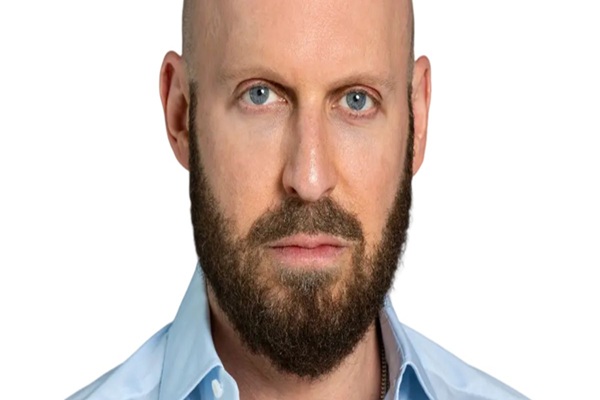
Most people outside of New York real estate circles have never heard of Meyer Orbach. That is by design.
He does not seek headlines. He does not post on social media. He does not appear at fashion galas or give keynote speeches at tech conferences. What he does instead is acquire Manhattan apartment buildings, develop affordable housing across eleven states, own a significant stake in an NBA franchise, and quietly accumulate one of the more substantial real estate fortunes built by any private investor in the northeastern United States over the past three decades.
The net worth figure attached to his name has been repeated across the internet with almost no explanation of where it comes from or what actually supports it. This article changes that.
Who Is Meyer Orbach?
Meyer Orbach is the chairman of The Orbach Group, a New York City-based real estate organization that specializes in Class-A residential properties and affordable housing. He is also the co-founder of GO Partners, a vertically integrated Manhattan real estate company, and the founder of Orbach Affordable Housing Solutions, a nationwide affordable housing acquisition and rehabilitation firm.
He is best known in real estate circles as a major owner and manager of multifamily residential buildings in Manhattan and as one of the largest acquirers of luxury apartment buildings in New York City history. In sports business circles, he is known as the largest limited partner in the Minnesota Timberwolves and Lynx, having sued then-owner Glen Taylor in 2021 over alleged violations of his contractual tag-along rights during the proposed sale of the franchise to Marc Lore and Alex Rodriguez.
His operational headquarters are in New York. The Orbach Group’s portfolio spans New York, New Jersey, Pennsylvania, California, and through its affordable housing subsidiary, eleven states in total.
Glen Taylor, who sold Orbach his initial Timberwolves stake in 2016, described him publicly as “a New York real estate mogul” and said at the time that The Orbach Group owns retail and residential buildings in New York, New Jersey, Pennsylvania, and California valued at over $2 billion. That portfolio valuation date was 2016. A decade of acquisitions, development, and appreciation has added substantially to that figure.
Meyer Orbach Net Worth: What the Estimates Actually Mean
The $520 million figure that circulates widely across the internet requires context to be meaningful. Here is an honest breakdown of where it comes from and how credible it is.
The $520 million estimate
This is the figure that appears most consistently across entertainment and finance estimation sites. It appears to represent a combined assessment of his real estate portfolio equity, his NBA ownership stake, and his other business interests. Because Orbach is a private individual who does not file public financial disclosures, this figure is inherently an estimate derived from known asset values rather than verified personal financial statements.
The $500 million to $1 billion range
Several more analytical sources place his wealth in a broader range of $500 million to $1 billion. This wider range more honestly reflects the uncertainty inherent in estimating the net worth of a private real estate investor whose holdings are spread across dozens of entities, partnerships, and subsidiaries. Real estate portfolios valued at over $2 billion in 2016 could plausibly support a personal equity position well above $500 million by 2026 depending on leverage ratios, debt structures, and appreciation rates.
Why the real number is genuinely difficult to pinpoint
Meyer Orbach is not publicly traded. He does not file SEC disclosures. His real estate holdings are distributed across multiple legal entities. His Timberwolves stake is in a private sports franchise. And his affordable housing subsidiary operates through LIHTC partnerships and other complex federal financing structures that make asset valuation non-straightforward.
The most honest statement about his net worth is this: the verified public record supports a figure in the hundreds of millions of dollars. The $520 million estimate is plausible and frequently cited. Whether the true figure is higher or lower than that depends on leverage ratios and portfolio valuations that are not publicly available.
The Orbach Group: The Foundation of His Fortune
The Orbach Group is Meyer Orbach’s primary wealth-generating vehicle and the business he has built his entire financial identity around.
The company specializes in Class-A residential properties in Manhattan and has grown under Orbach’s leadership into one of the more significant multifamily real estate operators on the East Coast. Under his leadership, The Orbach Group owns and manages over 130 buildings in New York City. That is not 130 units. That is 130 separate buildings in one of the most expensive real estate markets in the world.
The group has built a reputation specifically around the acquisition, management, and repositioning of high-end Manhattan apartment buildings. Its most notable individual transaction was the purchase of luxury apartment buildings from New York real estate legend Sheldon Solow in a deal reportedly valued at $850 million. A single $850 million transaction executed by one investor tells you more about the scale of Orbach’s operation than any estimated net worth figure can.
The Orbach Group’s portfolio spans retail and residential properties across New York, New Jersey, Pennsylvania, and California. When Taylor described the group’s portfolio in 2016, he noted a valuation of over $2 billion at that time. Ten years of Manhattan appreciation and continued acquisitions have extended that figure materially.
GO Partners: The Iconic Manhattan Tower Portfolio
Beyond The Orbach Group, Meyer Orbach co-founded GO Partners, a vertically integrated real estate company that represents some of the most recognizable residential addresses in Manhattan.
GO Partners owns iconic Manhattan towers including The Copper Buildings, One East River Place, One United Nations, and 1 and 2 Sutton Place North. These are not peripheral properties. They are prime Manhattan residential addresses in neighborhoods that command some of the highest per-square-foot residential values in the United States.
The combined portfolios of Orbach’s companies encompass approximately 8,500 multifamily units, retail spaces, and parking facilities across eleven states. Managing 8,500 units in the current housing market generates substantial recurring cash flow that contributes directly to personal net worth through partnership distributions and equity appreciation.
GO Partners represents the luxury residential end of Orbach’s portfolio strategy, while Orbach Affordable Housing Solutions represents the socially mission-driven end. Together they form a vertically diverse real estate operation that is not entirely dependent on any single market segment or geographic concentration.
Orbach Affordable Housing Solutions: The $309 Million Expansion
One of the most under-reported dimensions of Meyer Orbach’s business empire is Orbach Affordable Housing Solutions (OAHS), his nationwide affordable housing subsidiary that has grown into a significant operation in its own right.
In 2024 alone, OAHS invested over $309 million in affordable housing acquisitions and rehabilitations across multiple states. The company acquired over 870 affordable housing units in California, North Carolina, and Ohio within a single six-month period. Specific acquisitions included Ocean View Gardens and Playa del Alameda in Alameda County, California with a combined 102 family units. In North Carolina, OAHS acquired Salem Gardens Apartments in Forsyth County with 149 units, Fayetteville Gardens Apartments in Cumberland County with 100 units, and Tidewater Townhomes in New Hanover County with 104 units.
The company manages over 50 affordable properties with more than 8,000 units nationwide, making it a material player in the federally-assisted affordable housing ecosystem. Properties in this space are typically financed through Low Income Housing Tax Credits (LIHTC), which generate tax credit equity from institutional investors and create ongoing management fee income for operators like OAHS.
A $309 million single-year deployment of capital is not a small operation. It reflects the kind of institutional-scale activity that generates meaningful fee income, tax credit equity monetization, and long-term asset appreciation. This subsidiary alone contributes substantially to Orbach’s overall net worth picture.
The Minnesota Timberwolves Stake: Sports Ownership as Asset Diversification
Meyer Orbach’s entry into professional sports ownership began in 2016 and became one of the most financially and publicly significant investments of his career.
In 2016, Glen Taylor, the controlling owner of the Minnesota Timberwolves and Minnesota Lynx, needed a capital infusion after a proposed sale to private equity investor Steve Kaplan fell through. Taylor sold minority stakes to two investors: Chinese businessman Lizhang Jiang and Meyer Orbach. Orbach initially purchased a 9.5 percent stake in the Timberwolves through his entity Orbit Inc.
When Jiang sold his interest back to Taylor in 2019, Orbach expanded his position. By 2021, his company Orbit Inc. owned 17 percent of both the Timberwolves and the Lynx, making him the franchise’s largest limited partner by a significant margin, more than all other minority owners combined.
The financial significance of this stake is substantial. Forbes valued the Timberwolves at $1.67 billion at the time the lawsuit dispute was most prominent. A 17 percent stake in a franchise valued at $1.67 billion represents approximately $284 million in asset value before accounting for any minority discount that private market transactions typically apply. NBA franchise values have continued to appreciate significantly since then. The NBA’s new media rights deal, signed in 2024, added materially to the valuation floor for all 30 franchises.
The lawsuit and its outcome
In May 2021, when Taylor announced his agreement to sell the Timberwolves and Lynx to Marc Lore and Alex Rodriguez for $1.5 billion, Orbach filed a lawsuit in the U.S. District Court in Minneapolis alleging that Taylor had violated the partnership agreement by not honoring Orbach’s contractual tag-along rights. Those rights allowed Orbach to sell his stake before the controlling owner’s sale was completed.
Orbach’s complaint sought $300 million in damages and raised the additional concern that the $1.5 billion sale agreement contained no legal provision requiring Lore and Rodriguez to keep the franchise in Minnesota.
A federal judge dismissed Orbach’s claims in July 2021, ruling that because Lore and Rodriguez were initially acquiring only a 20 percent stake rather than controlling interest, Taylor had not yet transferred control of the franchise, and therefore Orbach’s tag-along rights had not yet been triggered.
The dismissal allowed the Taylor-Lore-Rodriguez transaction to proceed. Orbach’s 17 percent stake remained in place and has appreciated alongside the team’s rising valuation.
Meyer Orbach’s Income Streams: A Structured Overview
His wealth comes from multiple distinct income and equity sources that collectively support the estimated net worth figures in circulation.
Manhattan residential real estate. Rental income, property appreciation, and asset sale proceeds from over 130 buildings in one of the world’s most valuable real estate markets. This is his primary and most durable wealth source.
GO Partners portfolio income. Rental income and appreciation from iconic Manhattan towers including The Copper Buildings, One East River Place, and One United Nations, encompassing approximately 8,500 combined units across both portfolios.
OAHS management fees and tax credit equity. Fee income from managing over 8,000 affordable housing units nationwide, plus equity monetization from Low Income Housing Tax Credits generated by rehabilitated properties. A $309 million annual investment pace generates proportionate fee income streams.
Timberwolves ownership appreciation. A 17 percent equity stake in an appreciating professional sports franchise. NBA franchise values have increased dramatically over the past decade and the new media rights agreement has further elevated the floor for all team valuations.
The Sheldon Solow portfolio. The $850 million purchase from Sheldon Solow represents either ongoing rental income from retained properties or realized gains from subsequently sold properties, both of which contribute to personal net worth.
The Meyer Orbach Foundation. His private foundation has filed Form 990 returns with the IRS since at least 2017, indicating ongoing philanthropic activity that, while not a wealth source, reflects the scale of distributable income available for charitable deployment.
Meyer Orbach Quick Facts
Full name: Meyer Orbach Location: New York / New Jersey Primary business: Chairman, The Orbach Group Co-venture: GO Partners (co-founder) Affordable housing: Orbach Affordable Housing Solutions (founder) Portfolio scale: Over 130 Manhattan buildings, 8,500 combined residential units, 11 states NBA ownership: 17 percent stake in Minnesota Timberwolves and Lynx (since 2016) Notable transaction: $850 million apartment purchase from Sheldon Solow Legal history: Filed and lost $300 million lawsuit against Glen Taylor in 2021 Philanthropy: Meyer Orbach Foundation Inc. (active private foundation) Estimated net worth 2026: $500 million to $1 billion (most cited figure: approximately $520 million)
How Meyer Orbach Compares to New York Real Estate Peers
Placing his estimated net worth in context against other major New York real estate figures helps calibrate how significant his financial position actually is.
Stephen Ross, chairman of Related Companies and developer of Hudson Yards, has an estimated net worth of approximately $10 billion, placing him at the very top of New York real estate wealth. Orbach operates at a fraction of that scale.
Steve Witkoff, a prominent New York real estate developer and political figure, has an estimated net worth in the $500 million to $1 billion range, which makes him a direct peer-level comparison for Orbach in terms of wealth scale.
Richard LeFrak, whose family business the LeFrak Organization controls roughly 40 million square feet of real estate, is estimated at approximately $5 billion, representing a significantly larger scale than Orbach.
The Chetrit Group, another major New York multifamily operator, operates at roughly comparable scale to Orbach’s primary portfolio.
Within this peer group, Orbach sits comfortably as a significant but not dominant figure. He is not a billionaire on the scale of the very largest New York real estate families. He is a centimillionaire whose diversified portfolio, consistent operational track record, and sports ownership stake place him firmly in the upper tier of New York real estate wealth without approaching the stratospheric levels of the industry’s most recognized names.
Also Read : 42 Dugg Net Worth in 2026: From Detroit Streets to a Multi-Million Dollar Rap Career
What Drives the Wide Range in Net Worth Estimates
The difference between $520 million and $1 billion for Meyer Orbach’s net worth is not trivial. Understanding why the range is so wide helps explain why all net worth figures for private real estate investors should be treated as approximations rather than facts.
Real estate portfolios are not marked to market daily the way stock portfolios are. A building worth $50 million in a rising market may be worth $35 million if forced to sell quickly. The difference between the gross value of Orbach’s portfolio and his equity in that portfolio depends on the debt load he carries, and private real estate investors at his scale typically use leverage extensively.
His Timberwolves stake is in a private entity. The Forbes valuation of the franchise is itself an estimate. A 17 percent minority stake in a private sports franchise would typically trade at a discount to the implied value based on the whole-franchise valuation because minority stakes in private companies are illiquid and lack control.
His affordable housing portfolio generates income and asset value but LIHTC properties are subject to long-term use restrictions that limit exit value for the full compliance period.
None of these factors make his wealth less real. They make it genuinely difficult to state with precision. The honest answer is that his net worth is somewhere in the hundreds of millions, that $520 million is a reasonable median estimate, and that the true figure depends on variables that are not publicly available.
FAQ
What is Meyer Orbach’s net worth in 2026?
Meyer Orbach’s net worth in 2026 is most commonly estimated at approximately $520 million, with a broader credible range of $500 million to $1 billion. His wealth is built primarily on The Orbach Group’s portfolio of over 130 Manhattan buildings, his GO Partners joint venture, his Orbach Affordable Housing Solutions subsidiary managing over 8,000 units nationwide, and his 17 percent ownership stake in the Minnesota Timberwolves and Lynx.
Who is Meyer Orbach?
Meyer Orbach is the chairman of The Orbach Group, a New York City real estate organization specializing in Class-A properties and affordable housing. He is also the co-founder of GO Partners, which owns iconic Manhattan towers including The Copper Buildings and One East River Place, and the founder of Orbach Affordable Housing Solutions. He is the largest limited partner in the Minnesota Timberwolves NBA franchise, owning 17 percent of the team since 2016.
How did Meyer Orbach make his money?
Meyer Orbach built his wealth through the acquisition, development, and management of multifamily residential real estate in Manhattan and across the eastern United States. His single most notable transaction was an $850 million purchase of luxury apartment buildings from New York real estate developer Sheldon Solow. He has also generated wealth through affordable housing development, professional sports ownership, and his GO Partners joint venture owning landmark Manhattan residential towers.
How much of the Minnesota Timberwolves does Meyer Orbach own?
Meyer Orbach’s company, Orbit Inc., owns 17 percent of the Minnesota Timberwolves and Minnesota Lynx, making him the franchise’s largest limited partner. He originally purchased a 9.5 percent stake in 2016 and expanded his position when Chinese co-investor Lizhang Jiang sold his stake back to owner Glen Taylor in 2019.
Why did Meyer Orbach sue the Minnesota Timberwolves?
In May 2021, Meyer Orbach sued Timberwolves owner Glen Taylor alleging that the proposed $1.5 billion sale of the franchise to Marc Lore and Alex Rodriguez violated the partnership agreement’s tag-along rights, which entitled Orbach to sell his stake before any controlling ownership transfer was completed. He also alleged the sale agreement contained no legal provision requiring the new owners to keep the team in Minnesota. A federal judge dismissed Orbach’s claims in July 2021, allowing the sale to proceed.
What is The Orbach Group?
The Orbach Group is a comprehensive real estate organization based in New York City specializing in Class-A residential properties and affordable housing. Under Meyer Orbach’s leadership as chairman, the company owns and manages over 130 buildings in New York City and operates through its subsidiary Orbach Affordable Housing Solutions, which manages more than 50 affordable properties with over 8,000 units across eleven states.
What is GO Partners?
GO Partners is a vertically integrated real estate company co-founded by Meyer Orbach that owns and operates iconic Manhattan residential towers including The Copper Buildings, One East River Place, One United Nations, and 1 and 2 Sutton Place North. The combined portfolios of GO Partners and Orbach Affordable Housing Solutions encompass approximately 8,500 multifamily units, retail spaces, and parking facilities.
What is Orbach Affordable Housing Solutions?
Orbach Affordable Housing Solutions (OAHS) is a subsidiary of The Orbach Group that focuses on acquiring and rehabilitating affordable housing properties for low-income families. In 2024 alone, OAHS invested over $309 million in affordable housing across California, North Carolina, and Ohio, acquiring over 870 units. The company currently manages more than 8,000 affordable units across eleven states.
Is Meyer Orbach a billionaire?
Based on available estimates, Meyer Orbach is not considered a billionaire in the conventional sense. His net worth is most commonly estimated at approximately $520 million, with upper-range estimates reaching $1 billion. The uncertainty in the range reflects the private nature of his holdings and the difficulty of precisely valuing a complex portfolio of real estate assets, sports franchise equity, and partnership interests.
Where is Meyer Orbach based?
Meyer Orbach is based in the New York metropolitan area. His Orbach Group is headquartered in New York City, and he is described by ESPN and the Minneapolis Star Tribune as a New Jersey real estate investor and Manhattan real estate mogul respectively, reflecting the bi-state nature of his operations.
Conclusion
Meyer Orbach’s net worth story is not one of overnight success or single breakthrough moments. It is the story of a private investor who identified the most durable asset class in one of the world’s most durable real estate markets and built a portfolio of remarkable scale through consistent, disciplined execution over multiple decades.
The $520 million estimate that most commonly attaches to his name is plausible and supported by the publicly known scale of his real estate operations, his NBA franchise stake, and his rapidly expanding affordable housing platform. Whether the true figure is above or below that number depends on the leverage ratios and entity valuations that private investors are under no obligation to disclose.
What is certain is this: a man who purchased $850 million in Manhattan apartments from Sheldon Solow, owns 130 buildings in New York City, manages 8,500 residential units across eleven states, deployed $309 million in a single year into affordable housing, and holds 17 percent of an NBA franchise is not a minor figure in the American wealth landscape.
He is simply a very private one. And in his industry, that is often the mark of the most successful players.