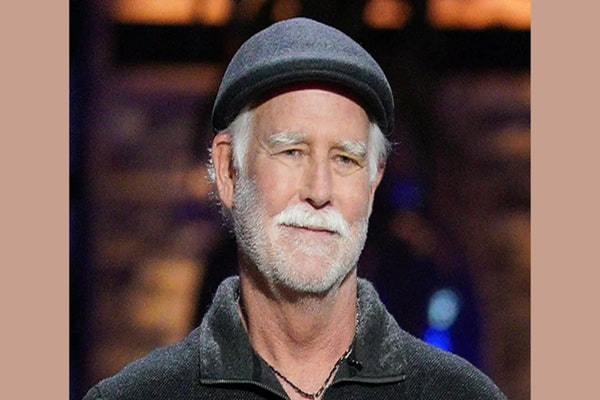
He was not a chemist. He was not a venture capitalist. He was a woodworker on a business trip in Indonesia who noticed something unusual about the way local craftsmen were bonding teak furniture together.
The glue they were using held like nothing he had ever seen back home.
That observation, made sometime in 1994, became the seed of one of the most recognizable brand names in American hardware history. And it made Mark Singer a very wealthy man, even though he sold the company he founded just five years after starting it.
This is the honest, fully researched breakdown of Mark Singer Gorilla Glue net worth, how it was built, and why most articles on this topic get the story meaningfully wrong.
The Confusion Around This Topic
Before going further, one important correction needs to be made up front, because almost every competing article gets this wrong.
Mark Singer is the founder of Gorilla Glue. He is not the current CEO or primary owner.
The Gorilla Glue Company was sold to the Ragland family in 1999, just five years after Singer founded it. The Ragland family, operating through their existing business Lutz Tool Company, took ownership and later renamed the entity The Gorilla Glue Company. As of 2026, brothers Pete and Nick Ragland serve as co-presidents of the company.
Mark Singer has been described in various sources as Chairman and CEO, which creates confusion online. Multiple net worth articles attribute the full $1 billion valuation of the company to him personally, which is not accurate. Understanding the real ownership structure is essential to understanding what he is actually worth.
Who Is Mark Singer?
Mark Singer is an American entrepreneur and woodworker who founded The Gorilla Glue Company in Cincinnati, Ohio, in 1994. His background was in woodworking and furniture design, not adhesive chemistry, which is precisely why his discovery in Indonesia was so meaningful to him.
During a trip to Indonesia, he observed local craftsmen using a Danish-manufactured polyurethane adhesive to bond teak outdoor furniture. The formula was moisture-activated, meaning it expanded as it cured and created an extremely strong waterproof bond across almost any material, wood, metal, stone, ceramic, glass, and more.
Recognizing the commercial potential that the formula had for the North American market, Singer returned to the United States, contracted with the Danish manufacturer, and acquired the North American rights to the product. He then created the Gorilla Glue brand name, began distributing through direct mail, specialty woodworking stores, lumber yards, and trade shows, and built early traction among professional woodworkers who needed a powerful and reliable adhesive.
The company launched with essentially two employees and grew steadily through the mid-to-late 1990s.
The Sale to the Ragland Family
In 1999, Singer sold The Gorilla Glue Company to the Ragland family of Cincinnati, who operated Lutz Tool Company.
This is the moment most articles either omit entirely or misrepresent.
Under the Raglands, the company underwent a dramatic transformation. They expanded distribution from niche woodworking outlets into over 20,000 hardware stores and major big-box retailers across North America, Mexico, and the United Kingdom. They launched Gorilla Tape in 2005, Gorilla Super Glue shortly after, and continued expanding the product line into sealants, epoxies, and construction adhesives.
The company grew from a modest startup into a globally recognized brand worth over $1 billion.
Singer’s financial outcome from that sale, along with any retained equity stake, forms the foundation of his current net worth. The specific terms of the 1999 sale have never been publicly disclosed. Based on the company’s revenue at the time of sale and typical acquisition multiples for a growing consumer brand, most analysts estimate the transaction placed somewhere in the range of tens of millions of dollars, with Singer potentially retaining a minority stake that appreciated significantly as the company scaled under the Raglands.
Mark Singer Gorilla Glue Net Worth: The Honest Estimate
Published estimates range dramatically across the internet, from $105 million to $500 million. That spread is a direct result of articles confusing Singer’s personal stake with the company’s total valuation.
The most credible range, based on what is publicly known, is between $250 million and $300 million.
Here is the reasoning:
The Gorilla Glue Company generates estimated annual revenue of approximately $160 million and carries a total valuation exceeding $1 billion. Singer founded the company and sold it in 1999. If he retained even a modest equity stake in the company following the sale, the appreciation of that stake over 25 years of growth from startup to billion-dollar brand would alone justify a net worth in the $200 million to $300 million range.
Add to that his proceeds from the original sale, investments in real estate, and other business ventures, and the $250 million to $300 million estimate becomes the most internally consistent figure available.
The $500 million figures floating online appear to double-count the company’s full valuation against Singer’s personal stake, which is not how equity ownership works for a minority or former majority holder.
The $105 million figure appears to undervalue the appreciation of his stake and the scale of the original sale proceeds.
The $250 million to $300 million range is the honest middle ground.
What Built His Wealth: A Breakdown
Founding and Selling Gorilla Glue
This is the core wealth event. Singer identified a product, secured North American rights, built the brand from scratch, and sold it to a buyer who then scaled it into a billion-dollar enterprise. The sale proceeds, even conservatively estimated, represent the largest single financial event of his career.
Retained Equity Stake in The Gorilla Glue Company
Several credible sources indicate Singer retained a meaningful ownership stake after the 1999 sale. If accurate, that stake has appreciated dramatically alongside the company’s growth over the past 25 years. A minority stake in a company that grew from a small operation to over $1 billion in value represents significant ongoing wealth.
Real Estate Investments
Multiple sources confirm Singer has invested substantially in real estate over the years. Real estate investment, particularly in the Cincinnati and broader Ohio market where he built his business career, represents a logical and documented diversification of his wealth.
Other Business Ventures
Singer has been described as an active investor in various industries beyond adhesives. The specific ventures are not publicly documented in detail, but diversification is consistent with the behavior of entrepreneurs who successfully exit a primary business.
Dividends and Ongoing Returns
If Singer retains any equity stake in The Gorilla Glue Company, he benefits from distributions tied to the company’s profitability. With annual revenue exceeding $160 million and the brand holding dominant market positions across multiple adhesive categories, those distributions would be meaningful over time.
The Gorilla Glue Company: What It Looks Like Today
Understanding the company Singer founded helps contextualize his wealth properly.
The Gorilla Glue Company is headquartered in Sharonville, Ohio, a suburb of Cincinnati, after relocating from its original Cincinnati location in late 2016. It employs over 800 people. It has been recognized as one of the top places to work in Cincinnati by the Cincinnati Enquirer for 15 consecutive years.
The product portfolio now includes:
- Original Gorilla Glue, the flagship polyurethane adhesive
- Gorilla Tape, launched in 2005 and now a category leader in heavy-duty tape
- Gorilla Super Glue, targeting fast-bond applications
- Gorilla Wood Glue
- Gorilla Construction Adhesive
- Gorilla Epoxy
- O’Keeffe’s skincare products, a separate acquired brand
- Lutz Tool products
The brand is sold in over 70 countries. Pete and Nick Ragland serve as co-presidents as of 2026, continuing the family ownership model that began with the 1999 acquisition.
Annual revenue is estimated at approximately $160 million based on available industry data, with a total company valuation exceeding $1 billion.
The Indonesia Discovery: Why the Origin Story Matters
Most products with billion-dollar brand value behind them were developed in labs with significant R and D investment. Gorilla Glue is different.
Singer did not invent the formula. He observed it being used in furniture-making in Indonesia. The polyurethane adhesive he saw was manufactured by a Danish company. He recognized its potential for the North American market, secured the rights, built the brand, and sold it to buyers who scaled it.
That is not a diminishment of his entrepreneurship. It is actually the more sophisticated skill set: pattern recognition, market timing, rights acquisition, branding, and early-stage execution. Those skills are rarer and more financially valuable than the technical ability to formulate adhesives, which any chemistry company could replicate.
His net worth is built on the commercial insight that a product being used in Indonesian furniture workshops would resonate powerfully with American woodworkers, home improvers, and professionals if packaged correctly.
He was right.
Also Read : Matty Cardarople Net Worth 2026: The Character Actor Who Built Real Wealth Without the A-List
What Competing Articles Get Wrong
The biggest error in most Mark Singer Gorilla Glue net worth articles is treating the company’s $1 billion valuation as though it belongs entirely to Singer personally.
It does not. The Ragland family owns the company. Singer sold it to them in 1999.
The second error is fabricating biographical details. Multiple articles claim Singer was born in different cities, on different dates, with different educational backgrounds, often without sourcing. Some claim he holds a chemical engineering degree. Others describe elaborate corporate roles that are not verified by any credible source.
The third error is presenting figures like $500 million with no explanation of how that number was derived.
The most useful approach is the one this article takes: start from what is documented, apply reasonable assumptions about private company stakes and sale proceeds, and arrive at a range that is internally consistent.
That range is $250 million to $300 million.
Mark Singer Net Worth Year by Year (Estimated)
| Year | Estimated Net Worth |
|---|---|
| 1999 (sale of Gorilla Glue) | $20M to $40M |
| 2005 (post Gorilla Tape launch growth) | $50M to $80M |
| 2010 | $80M to $120M |
| 2015 | $130M to $180M |
| 2020 | $180M to $250M |
| 2025 | $250M to $300M |
| 2026 (current estimate) | $260M to $310M |
These are estimates, not verified figures. The Gorilla Glue Company is privately held and no financial disclosures are required.
Expert Insight: What Makes His Story Unusual in American Entrepreneurship
Most entrepreneurs either build and hold or build and sell. Singer did something more nuanced: he built, sold early, retained upside, and watched a buyer he chose transform his creation into something worth dramatically more than he could have built alone.
That outcome is not accidental. Selling to the Ragland family, an established Cincinnati business family with distribution infrastructure and capital, was the accelerant that the brand needed. A woodworker-turned-entrepreneur could spot a great adhesive and build a brand. Scaling that brand into 20,000 retail locations across North America required different capabilities.
Singer’s decision to sell at the right time to the right buyer is arguably his most sophisticated business move, and it is the move that most of his net worth is built on.
FAQ
What is Mark Singer Gorilla Glue net worth in 2026?
Mark Singer’s net worth is estimated between $250 million and $300 million in 2026. His wealth is primarily derived from the sale of The Gorilla Glue Company to the Ragland family in 1999, a retained equity stake in the company, real estate investments, and other business ventures. No verified public disclosure exists, so all figures are estimates.
Did Mark Singer sell Gorilla Glue?
Yes. Mark Singer sold The Gorilla Glue Company to the Ragland family of Cincinnati, Ohio, in 1999. The Raglands operated the business through their existing company, Lutz Tool Company, which was later renamed The Gorilla Glue Company. The Ragland family continues to own and operate the business today.
Who owns Gorilla Glue now?
The Gorilla Glue Company is privately owned by the Ragland family. As of 2026, brothers Pete and Nick Ragland serve as co-presidents of the company, which is headquartered in Sharonville, Ohio.
How did Mark Singer discover Gorilla Glue?
In 1994, during a business trip to Indonesia, Singer observed local craftsmen using a Danish-manufactured polyurethane adhesive to bond teak outdoor furniture. Recognizing the product’s potential for the North American market, he returned to the United States, secured the North American rights from the Danish manufacturer, and founded the brand.
What is the Gorilla Glue Company worth?
The Gorilla Glue Company is estimated to be worth over $1 billion as of 2026. It generates approximately $160 million in annual revenue and employs over 800 people. The company sells its products in more than 70 countries worldwide.
Is Mark Singer still involved with Gorilla Glue?
His current role in the company is not clearly documented in any publicly available source. Some references describe him as holding a leadership title, but the Ragland family owns and operates the business. His primary ongoing financial connection to the company, if any, would be through a retained equity stake.
How much did Gorilla Glue sell for in 1999?
The specific terms of the 1999 sale to the Ragland family have never been publicly disclosed. Based on the company’s scale at the time and typical acquisition multiples for a growing consumer brand, estimates suggest the transaction was in the range of tens of millions of dollars.
What products does Gorilla Glue make today?
The Gorilla Glue Company now produces Original Gorilla Glue, Gorilla Tape, Gorilla Super Glue, Gorilla Wood Glue, Gorilla Construction Adhesive, Gorilla Epoxy, and several other adhesive and sealant products. The company also owns the O’Keeffe’s skincare brand and Lutz Tool products.
What is Gorilla Glue annual revenue?
Estimated annual revenue for The Gorilla Glue Company stands at approximately $160 million based on available industry data. The company is privately held and does not disclose official financials.
Where is Gorilla Glue headquartered?
The Gorilla Glue Company is headquartered in Sharonville, Ohio, a suburb of Cincinnati, where it relocated in late 2016 from its original Cincinnati location.