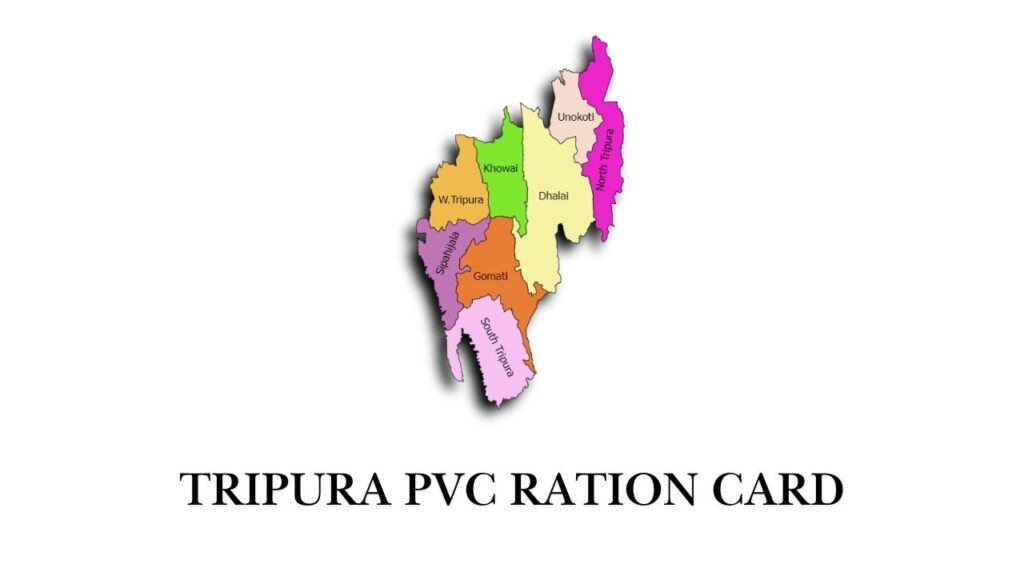
Under the Digital India programme of the Government of India, the state of Tripura has taken another significant step towards digitizing its Public Distribution System (PDS). The state has now started issuing Tripura PVC Ration Cards, which serve as a modern, secure, and durable replacement for the traditional paper-based ration cards.
This initiative marks an important milestone in the government’s efforts to provide citizens with enhanced digital services, improved transparency, and greater convenience in accessing subsidized food grains and essential commodities through the PDS. The PVC (Polyvinyl Chloride) ration cards are tamper-proof, long-lasting, and equipped with features that align with the broader vision of paperless governance, Aadhaar integration, and efficient benefit delivery.
What is Tripura PVC Ration Card?
The Tripura PVC Ration Card is a modern, durable, and secure version of the traditional paper-based ration card introduced by the Government of Tripura under the National Food Security Act (NFSA), 2013 and the Digital India initiative. Made from high-quality Polyvinyl Chloride (PVC) plastic material, this card replaces the old fragile paper ration cards with a tamper-proof, long-lasting smart card that is resistant to wear, tear, water damage, and fading. The PVC ration card serves the same purpose as the conventional one: it acts as an official identity document for eligible households to access subsidized food grains (such as rice, wheat, sugar, and kerosene) and other essential commodities through the Public Distribution System (PDS) in Tripura.
Tripura PVC Ration Card Purpose
The purpose of the Tripura PVC Ration Card is to modernize the state’s Public Distribution System (PDS) by replacing traditional fragile paper ration cards with a more durable, secure, consumer-friendly, and technology-integrated alternative. Launched in 2025 as the first such initiative in Northeast India, this move aligns with the Digital India programme and the broader goals of transparency, efficiency, and leakage reduction in food subsidy delivery under the National Food Security Act (NFSA), 2013.
The primary objectives include:
- Enhancing durability and longevity: Unlike paper cards that easily tear, get damaged by water, or fade over time, PVC (Polyvinyl Chloride) cards are waterproof, tamper-proof, and long-lasting, reducing the need for frequent reprints, replacements, and associated administrative costs for both beneficiaries and the government.
- Improving security and preventing fraud: The PVC cards incorporate advanced security features such as QR codes, barcodes, or embedded data that make forgery difficult. Combined with mandatory Aadhaar seeding and e-KYC (electronic Know Your Customer) verification (via OTP, facial recognition, or biometric methods at Fair Price Shops), they ensure that subsidized food grains and commodities reach only genuine, eligible beneficiaries, minimizing diversion, duplication, and corruption in the PDS.
- Facilitating seamless digital integration: These cards are designed to work efficiently with e-PoS (electronic Point of Sale) devices installed at ration shops. Beneficiaries can authenticate transactions quickly using Aadhaar-linked biometrics or OTP, enabling real-time tracking of entitlements, stock availability, and distribution history. This supports accurate monitoring, reduces manual errors, and promotes paperless governance.
- Enabling portability under One Nation One Ration Card (ONORC): The PVC format strengthens integration with the national portability scheme, allowing Tripura cardholders (including migrant workers) to access their entitled ration from any Fair Price Shop across India without restrictions, thereby supporting mobile populations and ensuring uninterrupted food security.
- Providing convenience and user-friendliness: The card is compact, easy to carry (similar to Aadhaar or voter ID cards), and more convenient for daily use. It eliminates the hassle of handling worn-out paper documents, making the process of availing subsidized items (rice, wheat, sugar, kerosene, etc.) smoother for beneficiaries, especially in rural and flood-prone areas of Tripura.
- Promoting overall PDS transparency and efficiency: By introducing PVC cards alongside high e-KYC compliance (Tripura achieved significant progress in 2025), the government aims to build a people-centric, tech-driven, and transparent distribution system. This reduces middlemen interference, ensures timely delivery of benefits, and supports data-driven policy decisions for better targeting of subsidies to Antyodaya Anna Yojana (AAY) and Priority Household (PHH) families.
Tripura PVC Ration Card Benefits
The Tripura PVC Ration Card offers several significant benefits that enhance the efficiency, security, and user experience of the Public Distribution System (PDS) in the state. Launched in 2025 as the first such initiative in Northeast India, it replaces fragile paper ration cards with durable, tamper-proof PVC (Polyvinyl Chloride) plastic cards, aligning with the Digital India programme and NFSA goals.
Key benefits include:
- Superior Durability and Longevity — PVC cards are waterproof, tear-resistant, and highly resistant to damage from moisture, dirt, folding, or adverse weather conditions common in Tripura’s flood-prone and humid climate. Unlike paper cards that often get torn, faded, or lost quickly, PVC cards last much longer, eliminating the frequent need for reprints, replacements, and associated administrative hassles for both beneficiaries and the government.
- Enhanced Security Against Fraud and Tampering — The cards feature advanced security elements such as unique QR codes, barcodes, or embedded data that make forgery extremely difficult. Combined with mandatory Aadhaar seeding and e-KYC verification (biometric, OTP, or facial authentication), they prevent duplicate claims, diversion of subsidized food grains, and corruption at Fair Price Shops (FPS). This ensures that benefits reach only genuine eligible households under AAY (Antyodaya Anna Yojana) and PHH (Priority Household) categories.
- Seamless Integration with Digital and e-PoS Systems — PVC cards are fully compatible with electronic Point of Sale (e-PoS) devices at ration shops. When swiped or scanned, they enable real-time authentication, automatic updating of transaction records in connected databases, and instant tracking of entitlements, stock levels, and distribution history. This promotes transparency, reduces manual errors, and allows for better monitoring by the Food, Civil Supplies and Consumer Affairs Department.
- Support for Portability Under One Nation One Ration Card (ONORC) — The digital-ready format strengthens integration with the national portability scheme, allowing Tripura beneficiaries (including migrant workers) to access their entitled subsidized food items (rice, wheat, sugar, kerosene, etc.) from any FPS across India without location restrictions. This provides greater flexibility and uninterrupted food security for mobile populations.
- Improved Convenience and User-Friendliness — Designed like Aadhaar or voter ID cards, PVC ration cards are compact, lightweight, and easy to carry in wallets or pockets. They eliminate the inconvenience of handling damaged paper documents, making the process of availing ration quicker and more hassle-free for daily users, especially in rural and remote areas.
- Cost Savings and Administrative Efficiency — By reducing the need for repeated card issuance and physical verification, the initiative saves government resources on printing and logistics. It also contributes to a paperless, eco-friendly PDS, while enabling data-driven policy decisions for better targeting of subsidies and quality assurance in food distribution.
- Promotion of Transparency and People-Centric Governance — The cards support real-time monitoring and public-centric reforms, minimizing middlemen interference and ensuring timely, quality supply of subsidized items. Tripura’s high e-KYC compliance further reinforces this, making the PDS more accountable and equitable.
Tripura PVC Ration Card Online Apply
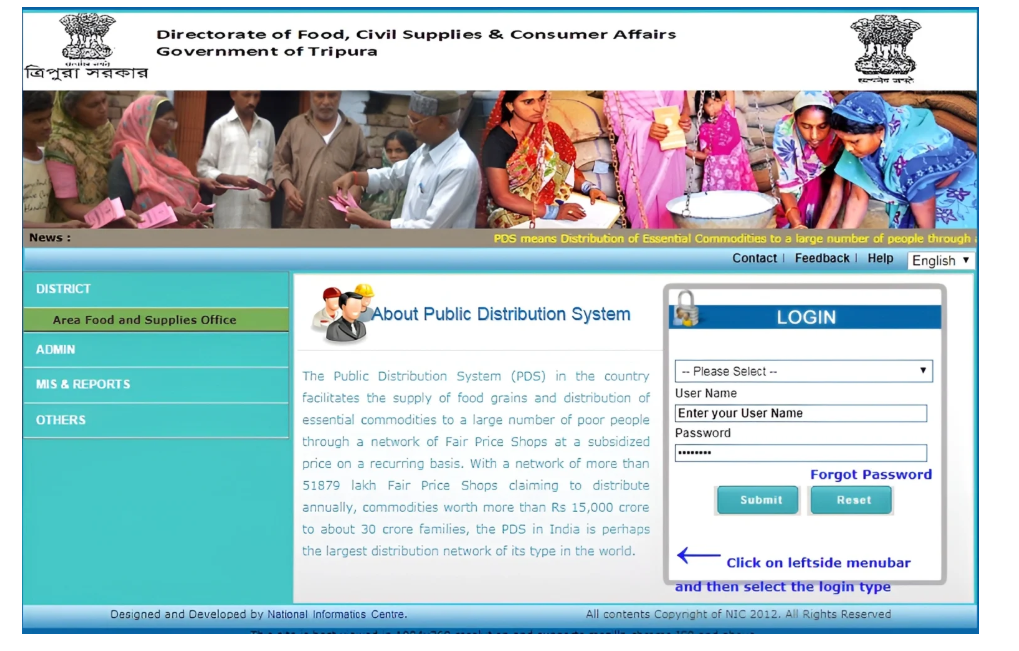
The process is primarily government-driven and offline/local:
- For Existing Beneficiaries (Replacement): The Food, Civil Supplies and Consumer Affairs Department has prepared PVC cards in phases (e.g., 4.78 lakh in the first phase in 2025).
- Eligible households (AAY and PHH categories) receive notifications via SMS, local announcements, or at their Fair Price Shop (FPS).
- Beneficiaries must visit their designated Government Fair Price Shop (FPS) or ration shop with:
- Existing paper ration card.
- Aadhaar cards of family members.
- e-KYC is completed on-site (biometric or OTP-based authentication).
- The PVC card is handed over directly at the FPS or through special distribution drives/camps organized by the department.
- Distribution often happens at specific FPS locations (e.g., shops numbered 42, 87, 219 in Agartala and other districts).
- For New Ration Card Applicants: If you do not have a ration card yet:
- Apply for a new ration card first (not PVC-specific).
- The process is mainly offline or semi-online: Visit the nearest Fair Price Shop, Sub-Divisional Magistrate (SDM) office, or Food & Civil Supplies office.
- Fill the application form (available offline or downloadable from official sites).
- Submit required documents: Aadhaar cards of all family members, address proof, income proof (if needed), photos, etc.
- After approval and e-KYC, if your new card falls under the ongoing PVC replacement drive, you will receive a PVC version instead of paper.
- Partial online support: Check eligibility or apply via the state PDS portal at https://epdstr.gov.in/ (RCMS – Ration Card Management System) or https://nfsa.gov.in/State/TR (redirects to Tripura services). However, final issuance requires physical verification.
Steps to Check Status or Related Services Online
While direct online apply for PVC is not available, use these portals for related checks:
- Visit https://epdstr.gov.in/ (Tripura Ration Card Management System).
- Go to “Public Login” or “RC Details” section.
- Enter ration card number or Aadhaar to view details, status, or entitlements.
- NFSA Tripura page: https://nfsa.gov.in/State/TR → Links to state portal for beneficiary search or status.
- Mera Ration App (Android/iOS): Download from Play Store/App Store.
- Log in with Aadhaar or ration card number.
- Check entitlements, transaction history, FPS locator, and e-KYC status (helps in PVC issuance process).
- e-District Tripura: Register for citizen services; some PDS-related applications or certificates may be available here.
Key Requirements for PVC Card Issuance
- Completed Aadhaar seeding and e-KYC (mandatory; without it, benefits may be suspended).
- Existing valid ration card (for replacement).
- No pending dues or verification issues.
Helplines and Support
- Toll-free NFSA helpline: 1967
- Tripura Food & Civil Supplies Department: Contact local SDM office, FPS dealer, or district food controller.
- Official website: https://epostr.gov.in/ or https://nfsa.gov.in/State/TR
FAQs
What is the Tripura PVC Ration Card? It is a durable, plastic (PVC) version of the traditional paper ration card issued by the Government of Tripura. Made from high-quality Polyvinyl Chloride material, it replaces old paper cards with a tamper-proof, waterproof, and long-lasting smart card that supports digital authentication. Why did Tripura introduce PVC Ration Cards? The main purpose is to modernize the Public Distribution System (PDS), improve security, reduce fraud, increase card durability, and ensure better integration with Aadhaar e-KYC and e-PoS machines at Fair Price Shops. Tripura became the first state in Northeast India to launch this initiative in 2025. Who is eligible to get a Tripura PVC Ration Card? Existing eligible beneficiaries under NFSA (National Food Security Act) — both AAY (Antyodaya Anna Yojana) and PHH (Priority Household) category households — are being issued PVC cards in phases. New applicants first get a regular ration card, and if eligible, may receive PVC during the ongoing replacement drive. Is the PVC Ration Card different from the regular ration card in terms of benefits? No. The benefits remain exactly the same: subsidized food grains (rice, wheat, sugar, kerosene, etc.) as per your category (35 kg/month for AAY families, 5 kg/person/month for PHH). The only difference is the card material and added digital features. How can I apply for a Tripura PVC Ration Card? There is no separate online application for PVC cards.
- Existing paper card holders receive PVC cards through government-led replacement drives at Fair Price Shops (FPS).
- You will get an SMS or announcement from your local FPS/SDM office when your turn comes.
- For new ration cards, apply offline at your nearest FPS, SDM office, or through the RCMS portal (epdstr.gov.in) — PVC may be issued if your application falls under the current phase.
What documents do I need to collect my PVC Ration Card? Bring your existing paper ration card and Aadhaar cards of all family members. e-KYC (Aadhaar verification) is mandatory and usually done on the spot at the FPS using biometric or OTP. Is e-KYC compulsory for PVC Ration Card? Yes, 100% mandatory. Without completing e-KYC (Aadhaar seeding + authentication), you may not receive the PVC card, and in some cases, ration benefits can be temporarily suspended. How do I complete e-KYC for my ration card?
- At FPS: Visit your local ration shop — dealer will do biometric (fingerprint/iris) or OTP-based e-KYC.
- Online: Use Mera Ration App (download from Play Store) → Log in with Aadhaar or ration card number → Complete face authentication or OTP e-KYC.
Can I use my Tripura PVC Ration Card anywhere in India? Yes. It is fully integrated with the One Nation One Ration Card (ONORC) scheme. You can collect your entitled ration from any Fair Price Shop across India using your PVC card and Aadhaar authentication. What should I do if I haven’t received my PVC Ration Card yet?
- Visit your local FPS and inquire about the distribution schedule.
- Check updates via Mera Ration App or SMS from the department.
- Contact your SDM office or district food controller.
- Helpline: 1967 (NFSA national toll-free) or state PDS helpline.
Is the PVC Ration Card free of cost? Yes. The government is issuing PVC cards free of charge as part of the PDS modernization drive. No fees are charged from beneficiaries during replacement. What happens if my PVC Ration Card is lost or damaged? Report the loss immediately at your FPS or SDM office. Apply for a duplicate card (process similar to paper cards). Since PVC is durable, loss/damage cases are expected to be much lower. Can I check my ration card details or balance online? Yes. Use:
- Mera Ration App (ration balance, transaction history, FPS locator).
- epdstr.gov.in (RCMS portal) – enter ration card number or Aadhaar to view details.
- nfsa.gov.in/State/TR – Tripura NFSA page for beneficiary search.
Will old paper ration cards stop working after PVC distribution? No. Paper cards remain valid until officially replaced or until the department announces a cut-off date. Both may coexist during the transition phase. Where can I get the latest updates on PVC Ration Card distribution?
- Official website: epdstr.gov.in or nfsa.gov.in/State/TR
- Mera Ration App notifications
- Local FPS announcements
- District Magistrate/SDM offices
- State helplines or social media handles of Tripura Food & Civil Supplies Department