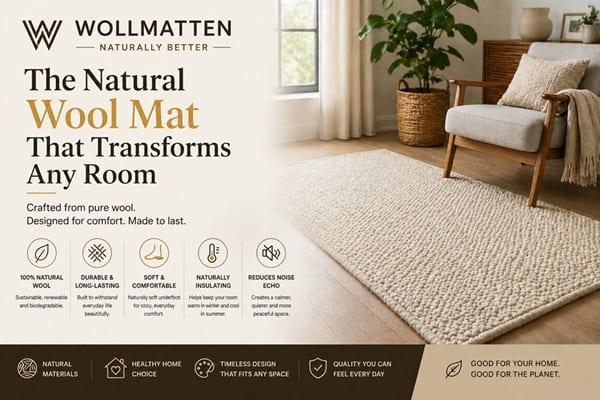
You step out of bed onto a cold floor. The shock wakes you up, but not in a good way. You wish for something soft and warm underfoot. Something that does not feel like punishment first thing in the morning. Wollmatten solve this problem. These wool mats bring comfort, warmth, and natural beauty to any space. No more cold feet. No more harsh synthetic materials. Just the gentle softness of pure wool.
Wollmatten, the German word for wool mats, are floor coverings made from sheep’s wool. People have used them for centuries across Europe and beyond. The reason is simple. Wool works. It insulates. It breathes. It feels wonderful. Unlike synthetic rugs that sit on top of a room, Wollmatten become part of the room. They add texture, warmth, and a sense of calm that man made materials cannot copy.
What Makes Wollmatten Different From Regular Rugs
Most rugs sold today come from petroleum. Nylon, polyester, polypropylene. These materials start in a factory, not on an animal. They feel rough. They trap heat. They off gas chemicals into your home. Wollmatten come from sheep. The wool grows naturally, year after year, without harming the animal. The fibers have a natural crimp and curl that creates tiny air pockets.
Those air pockets do two important things. They trap warm air in winter, keeping your feet comfortable. They also allow air circulation, preventing the damp, musty feeling that synthetic rugs develop. Wool fibers can absorb up to thirty percent of their weight in moisture without feeling wet. This means Wollmatten regulate humidity naturally. No clammy surfaces. No mold growth underneath.
A Quick Look Back at History
Wool mats are not a new invention. Ancient civilizations figured out wool’s value thousands of years ago. In Central Asia, nomadic tribes felted wool into dense mats for tents and yurts. These mats provided insulation against frozen ground and bitter winds. In medieval Europe, wool coverings appeared in castles and cottages alike. The wealthy had finely woven pieces. Common people made do with simpler felted versions.
Traditional craftsmanship passed from generation to generation. Artisans learned which wools worked best for different purposes. Soft Merino for comfort. Tough Shetland for durability. The patterns woven into these mats often told stories. Family histories. Religious symbols. Tribal identities. Trade routes eventually spread these designs across continents. Persian motifs mixed with Scandinavian minimalism. Alpine utility blended with Mediterranean warmth.
The industrial revolution changed production. Machines could weave faster than any human hand. Mass production made wool mats available to more people at lower prices. But the basic material remained the same. Wool. Natural, renewable, wonderful wool. Today, both handcrafted and machine made Wollmatten exist side by side. Each has its place. Each offers the same fundamental benefits.
How Wollmatten Get Made
Good Wollmatten start with good wool. Ethical sheep farms raise animals in healthy conditions. Shearing happens once per year, usually in spring before hot weather arrives. The sheep grow a new coat naturally. The process does not hurt them. After shearing, the raw wool contains lanolin, dirt, and vegetable matter. Washing removes these impurities.
Carding comes next. Machines with fine wires brush the wool fibers until they all run in the same direction. This prepares the wool for either weaving or felting. Weaving uses looms to interlace threads into flat fabric. Felted mats use heat, moisture, and agitation to lock fibers together into a dense sheet. Both methods produce excellent results. Woven mats often have more defined patterns. Felted mats feel denser and more uniform.
Eco friendly dyes add color. Many producers now use natural pigments from plants and minerals. These dyes create rich, earthy tones that synthetic colors cannot match. They also biodegrade safely at the end of the mat’s life. After dyeing, the mats receive final treatments. Edge binding prevents unraveling. Surface shearing creates a uniform pile height. Backing materials may be added for extra stability on smooth floors.
The Different Types of Wollmatten
Thin Wollmatten work well in low traffic areas like bedrooms or studies. They add a layer of comfort without creating a tripping hazard. Doors can still open freely over them. Thin mats also suit minimalist decor where a heavy rug would feel out of place.
Thick Wollmatten provide serious cushioning. Standing on one feels like standing on a cloud. Kitchens and laundry rooms benefit from thick mats because you spend so much time on your feet. Thick mats also offer better insulation. Cold basement floors feel almost warm through a dense wool layer.
Felted Wollmatten have a uniform, almost industrial appearance. The surface feels smooth and tight. These mats work well in modern or Scandinavian interiors where clean lines matter. Felted wool also resists dirt and vacuuming easily.
Handwoven Wollmatten show the artisan’s skill. Slight variations in texture and color give each piece unique character. These mats work as art pieces as much as floor coverings. Expect to pay more for handwoven versions, but many people consider the investment worthwhile.
Machine made Wollmatten offer consistency and lower prices. The patterns repeat perfectly. The dimensions stay exact. For large areas or commercial applications, machine made mats make practical sense. The quality remains high, even if the romance feels less.
Benefits You Will Notice Every Day
Warmth stands out immediately. Step onto a Wollmatte on a cold morning and you will understand. The wool does not feel cold like tile or wood. It does not feel rough like cheap synthetic rugs. Just gentle, insulating softness that makes getting out of bed less painful.
Sound absorption matters more than most people realize. Hard floors echo. Footsteps, conversations, television noise all bounce around. Wollmatten soak up that sound. A room with wool rugs feels quieter and more peaceful. Apartment dwellers notice the difference most. Neighbors upstairs no longer hear every step. The space below stays calmer.
Hypoallergenic properties help sensitive people breathe easier. Wool naturally resists dust mites, mold, and bacteria. These organisms cannot thrive in wool fibers the way they do in synthetic materials. For allergy sufferers, Wollmatten make a real difference in indoor air quality. No more sneezing every time you vacuum.
Durability surprises many first time buyers. Wool fibers bend but do not break. They recover their shape after compression. Furniture leaves temporary dents that disappear within hours. Foot traffic wears wool slowly. A good Wollmatte can last decades with proper care. Synthetic mats often look tired after just a few years.
Fire resistance provides safety you hope never to need. Wool burns slowly and self extinguishes when the flame source removes. Synthetic mats melt and spread fire. In a home safety comparison, wool wins every time. Some building codes actually require wool materials in certain applications for this very reason.
Where To Use Wollmatten Around Your Home
Living rooms benefit from large Wollmatten. A big wool rug defines the seating area. It adds warmth during winter movie nights. It softens the room’s acoustics for conversation. Choose a neutral color that complements your furniture, or go bold with a traditional pattern that becomes the room’s focal point.
Bedrooms want soft, plush Wollmatten on both sides of the bed. Your feet touch the mat before anything else each morning. Make that first contact pleasant. A runner along the bed’s far side adds symmetry. A larger mat under the whole bed creates a cozy sleeping nest. Either approach works.
Hallways and entries need durable Wollmatten that can handle traffic. Choose denser felted options here. The low profile prevents tripping. The tight weave resists dirt from shoes. Darker colors hide the inevitable marks that high traffic areas collect.
Home offices benefit from wool chair mats. Hard plastic mats crack and slide around. They look unattractive and feel unpleasant. A dense Wollmatte protects your floor while adding warmth under your desk. Your rolling chair moves fine on short pile wool. The room looks more professional.
Nurseries and playrooms should have Wollmatten. Babies crawl on them. Toddlers fall on them. Wool provides a soft landing that synthetic carpets cannot match. The natural materials mean no chemical fumes while your child’s developing lungs breathe nearby.
Choosing The Right Wollmatte For Your Space
Size matters first. Measure your room before shopping. A rug too small looks awkward. A rug too large overwhelms the space. For living rooms, the front legs of all seating should rest on the rug. For dining rooms, chairs should stay on the rug when pulled out. For bedrooms, at least two feet of rug should extend past each side of the bed.
Thickness affects both comfort and practicality. High traffic areas want denser, lower pile mats. They wear better and stay cleaner. Low traffic areas can use thicker, plusher mats. Bedrooms, studies, and nurseries are perfect for thick wool. Hallways, entries, and kitchens should have thinner options.
Color and pattern transform a room. Neutral Wollmatten in cream, gray, or brown blend seamlessly with existing decor. Traditional patterns add visual interest without overwhelming. Bold colors make the rug the star. Consider your room’s existing palette. The rug does not need to match perfectly, but it should coordinate.
Material quality varies significantly. Pure wool costs more but performs best. Wool blends with synthetic fibers cost less but lose some benefits. Check labels carefully. Some mats labeled wool contain less than fifty percent actual wool. For the full Wollmatten experience, look for at least eighty percent wool content.
Caring For Your Wollmatte
Vacuum regularly. Wool sheds loose fibers, especially when new. This is normal and stops after a few months. Use a vacuum without a beater bar, or with the beater bar turned off. The aggressive action of rotating brushes can damage wool fibers over time.
Clean spills immediately. Blot with a clean, dry cloth. Do not rub. Rubbing pushes the spill deeper into the fibers. For stubborn spots, use a mild wool safe detergent diluted in water. Test any cleaner on a hidden area first. Never use bleach or enzyme cleaners on wool.
Rotate your Wollmatte twice per year. Sunlight fades colors unevenly. Foot traffic compresses certain areas more than others. Rotating distributes both effects evenly. Your mat will look better for longer.
Professional cleaning every two years restores your Wollmatte’s appearance. Find a cleaner experienced with wool. They will use appropriate pH balanced solutions and gentle extraction methods. Avoid steam cleaning. The heat can shrink wool.
Store Wollmatten rolled, never folded. Folding creates permanent creases. Roll the mat with the pile facing inward. Wrap it in cotton sheeting for protection. Store in a cool, dry place away from pests. Cedar chips or lavender sachets naturally repel wool eating insects.
Also Read : Chromtex Fabric: The Sustainable Performance Textile Designers Trust
Where Wollmatten Fall Short
Honest advice includes drawbacks. Wollmatten cost more than synthetic alternatives. A good wool rug represents an investment. For budget conscious shoppers, the upfront price feels high. Consider the long lifespan. Your Wollmatte might outlast three cheap synthetic rugs.
Wool requires more care than polyester. You cannot hose down a wool mat or scrub it aggressively. Spills need prompt attention. Ignored stains set permanently. For messy households with young children or pets, consider wool blends that balance performance with forgiveness.
Moisture sensitivity matters. Wool absorbs water readily. A soaked Wollmatte takes a long time to dry. Wet wool can develop mildew smells if not dried properly. Keep wool mats away from entry doors where wet boots drip. Use synthetic mats in truly wet areas like bathrooms.
Some people find wool scratchy. Soft Merino solves this for most, but individual sensitivity varies. Test a small wool sample against your skin before committing to a large rug. Most people adjust quickly, but a few never enjoy the texture.
Sustainability And Ethics
Wool is one of the most sustainable materials available. Sheep grow a new coat every year. The resource renews itself without petroleum or intensive farming. When your Wollmatte finally wears out, it biodegrades completely. No plastic waste sits in a landfill for centuries.
Ethical farming practices matter. Look for certifications that verify animal welfare. Sheep should have access to pasture, clean water, and shelter. Shearing should happen gently by trained professionals. Some producers go further, supporting local communities and paying fair wages to artisans.
Traditional production supports cultural heritage. Many Wollmatten still come from communities that have woven wool for generations. Buying these mats keeps skills alive. It provides income that might otherwise disappear. Your purchase connects you to centuries of craftsmanship.
Making Your Final Choice
Walk on different Wollmatten before buying. Visit stores that carry wool rugs. Take off your shoes. Feel the difference between thin and thick, felted and woven, Merino and Shetland. Your feet will tell you what you like.
Order samples for online purchases. Color looks different on screens. Texture cannot be felt through a website. Most quality sellers will send small samples for a nominal fee. Order several. Live with them for a few days. See how they look in your light and with your furniture.
Read return policies carefully. Wool rugs are heavy and expensive to ship. Some sellers charge restocking fees. Know the terms before committing. Better yet, buy from sellers with generous return policies or physical stores you can visit.
Start small if unsure. Buy a Wollmatte for one room first. Live with it for a few months. See how you like the feel, the care requirements, and the appearance. You will probably want more. But starting small limits risk while you learn.
Wollmatten offer something that synthetic mats cannot. Natural warmth, genuine comfort, and honest materials that work with your home rather than just covering it. The initial investment feels significant. The daily pleasure of soft wool underfoot makes it worthwhile. Your feet will thank you every single morning.