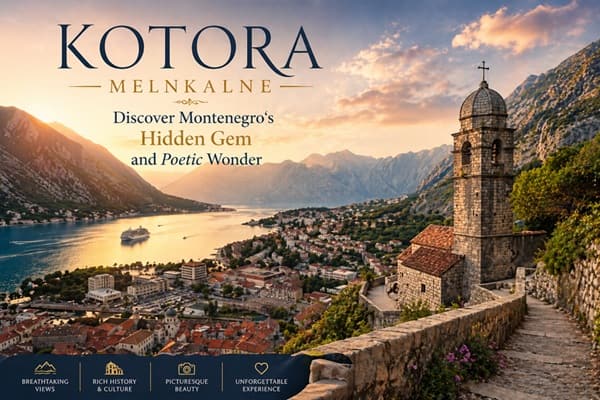
You have probably never heard the name Kotora Melnkalne before. That is exactly why it matters. Most travelers know Kotor, the famous coastal town in Montenegro. But Kotora Melnkalne is something different. It is a poetic, creative twist on that same place. The name combines two languages and two cultures into one beautiful phrase. And it captures something that the simple name Kotor cannot.
Kotora Melnkalne is not a new destination. It is not a different town. It is a way of seeing Kotor through a more emotional and artistic lens. The term gives personality to a place that already has plenty of it. Once you understand what the name means, you will never look at this corner of the Adriatic the same way again.
Breaking Down the Name and Its Real Meaning
The word Kotora comes from Kotor, the historic town tucked into the Bay of Kotor. Melnkalne comes from the Latvian language. It translates directly to Black Mountain. Put them together and you get a phrase that means Kotor of the Black Mountain. That is a perfect description because Montenegro itself means Black Mountain in several languages.
This blending of languages is unusual. A Latvian word describing a Montenegrin town. But it works beautifully. The name feels ancient and modern at the same time. It carries mystery and weight. And it invites curiosity. People hear Kotora Melnkalne and want to know what it means and where it is. That curiosity is the first step toward falling in love with this place.
Where to Find Kotora Melnkalne on the Map
Kotora Melnkalne sits on the southwestern coast of Montenegro, right along the Adriatic Sea. The Bay of Kotor surrounds it with deep blue water and steep mountains rising on every side. Those mountains give the region its name. They are dark, rugged, and dramatic, especially when shadows fall across them in the late afternoon.
The town itself lies at the end of the bay, sheltered from the open sea. This location made it valuable for thousands of years. Invaders could not easily reach it. Traders found safe harbor there. And today, visitors find one of the most stunning settings in all of Europe. The mountains drop straight into the water. Medieval walls climb the hillsides. Boats bob gently in the marina. It looks like something from a painting.
The Deep History Carved Into Every Stone
People have lived in this area for more than two thousand years. The Illyrians settled here first, building rough settlements along the coast. Then the Romans arrived. They saw the strategic value of the bay and turned Kotor into an important port. You can still find traces of Roman roads and villas if you know where to look.
The Byzantines fortified the town during the early Middle Ages. They built walls and towers to protect against invaders. But the Venetians left the biggest mark. They ruled Kotora Melnkalne for four hundred years, starting in the fifteenth century. During that time, they turned the town into a masterpiece of Gothic and Renaissance architecture.
Walk through the Old Town today and you see Venetian influence everywhere. Stone palaces line the narrow streets. Churches display a mix of Catholic and Orthodox designs. The Clock Tower stands in the main square, a reminder of the order and precision the Venetians brought. Even the town’s famous walls, which snake up the mountain behind the buildings, were strengthened and expanded under Venetian rule.
The Ottomans tried many times to conquer Kotora Melnkalne. They never succeeded. The walls held. The bay protected the town. And the people refused to surrender. Later, the Austro-Hungarian Empire took control and added their own layer to the town’s history. They built naval facilities, schools, and roads, modernizing the area while preserving its core character.
Walking Through the Old Town Today
Entering the Old Town of Kotora Melnkalne feels like stepping back in time. The main entrance is the Sea Gate, built during the Venetian period. A faded relief of the Virgin Mary sits above the archway, watching over everyone who passes beneath. Once inside, you find yourself in a maze of cobblestone streets and hidden squares.
St. Tryphon‘s Cathedral dominates the center of the Old Town. Construction began in the twelfth century, making it one of the oldest buildings in the area. The cathedral survived earthquakes, wars, and centuries of wear. Its interior holds gold and silver relics, ancient frescoes, and a sense of quiet reverence.
The Maritime Museum sits in a baroque palace not far from the cathedral. It tells the story of Kotora Melnkalne’s relationship with the sea. Model ships, navigational tools, and paintings of old sea captains fill the rooms. You learn how this small town built a reputation as a maritime power, sending sailors across the Mediterranean and beyond.
Small cafes and restaurants hide in nearly every corner of the Old Town. Locals sit outside drinking espresso, watching tourists wander by. The pace of life here is slow. No one rushes. People take time to talk, to eat, to simply exist in this beautiful place.
The Famous Walls That Climb the Mountain
The defensive walls of Kotora Melnkalne stretch for nearly four and a half kilometers. They start at the waterfront and climb straight up the face of the mountain behind the town. From a distance, they look like a giant stone snake slithering up the hillside.
Climbing those walls is one of the most memorable experiences you can have here. The path includes more than one thousand steps, but the reward at the top makes every step worth it. The San Giovanni Fortress sits at the summit, offering a view that will stop you cold. The entire Bay of Kotor spreads out below. The mountains rise on all sides. The water shimmers in the sunlight. And the red roofs of the Old Town cluster together at the water‘s edge.
Do the climb early in the morning or late in the afternoon. The middle of the day gets hot, and the steps offer little shade. Bring water. Take breaks. And give yourself time to simply stand at the top and absorb the scene.
The Bay That Looks Like a Fjord But Isn’t
Many people call the Bay of Kotor Europe‘s southernmost fjord. The geography certainly looks like a fjord. Steep cliffs drop into narrow waterways. The mountains press close to the shore. But geologists will tell you it is actually a ria, a submerged river canyon carved by rising sea levels after the last ice age.
Whatever you call it, the bay is stunning. Boat tours take you across the water to small islands and hidden villages. One stop is Our Lady of the Rocks, a man made island with a church and museum on top. Local legend says sailors built the island over centuries by sinking old ships and depositing rocks around a small natural reef.
Another stop is the town of Perast, a quiet gem just a short ride from Kotora Melnkalne. Perast feels even quieter and more preserved than Kotor itself. A few hotels, a handful of restaurants, and lots of stone buildings line the waterfront. It is the perfect place to escape the crowds and simply breathe.
The Drive Up the Serpentine Road
The Serpentine Road connects Kotora Melnkalne to the mountain village of Njeguši. The road earned its name honestly. It twists and turns through twenty five hairpin bends as it climbs away from the coast. Each turn offers a new view of the bay below. Every switchback reveals more of the mountains above.
Njeguši sits high in the mountains, surrounded by forests and pastures. The village is famous across Montenegro for one thing. Njeguški pršut, a dry cured ham smoked over beech wood and aged in the cool mountain air. Locals serve it thin sliced, often with fresh cheese and olives. A glass of local wine or a shot of rakija makes the meal complete.
The drive takes less than an hour from Kotor, but the change in scenery is dramatic. You leave the Mediterranean coast and enter a Balkan highland. The air cools. The smells change. And you understand why this small region contains so much diversity.
Eating and Drinking Like a Local
Food in Kotora Melnkalne reflects the town‘s position between sea and mountains. Fresh fish and seafood come straight from the bay. Grilled squid, black risotto made with cuttlefish ink, and Adriatic sea bass appear on most menus. Olive oil from local groves dresses every salad.
From the mountains come heartier dishes. Kačamak, a thick porridge made from potatoes and cornmeal, sticks to your ribs on cool evenings. Njeguški pršut, the smoked ham from the village above, appears on every charcuterie board. Local cheeses range from soft and fresh to aged and crumbly.
Wash it all down with Vranac, Montenegro’s signature red wine. The grape produces a deep, dark wine with bold tannins and flavors of dark berries and spices. For something stronger, try rakija. This fruit brandy comes in many varieties, with plum and grape being the most common. Locals drink it as an aperitif, a digestif, or simply anytime they have company.
Festivals That Bring the Town to Life
Kotora Melnkalne does not sleep quietly behind its walls. The town knows how to celebrate. The Kotor Carnival happens every winter, transforming the Old Town into a riot of masks, music, and dancing. The tradition dates back centuries, and locals take it seriously. Elaborate costumes fill the streets. Parades wind through the main squares. And the party lasts for days.
Boka Night takes place in August. Boats decorated with lights sail across the bay in a floating parade. Each vessel tells a different story through its decorations. Families gather along the waterfront to watch. Fireworks explode overhead. The water reflects everything, doubling the beauty.
KotorArt runs through the summer months. Classical concerts happen in churches and courtyards. Theater performances take place in open squares. Art exhibitions fill galleries and public spaces. The entire town becomes a stage.
When to Visit for the Best Experience
Summer brings the biggest crowds to Kotora Melnkalne. Cruise ships anchor in the bay and unload thousands of visitors. The narrow streets of the Old Town become nearly impossible to navigate. Restaurants fill up. The fortress trail gets crowded. If you want energy and nonstop activity, summer delivers.
But the best time to visit is spring or autumn. April through June offers mild temperatures and blooming flowers. September through October brings warm days, cool nights, and far fewer people. The light is softer for photography. The hikes are more comfortable. And you can actually hear yourself think as you wander the cobblestone streets.
Winter is quietest of all. Many tourists avoid the colder months, leaving the town to locals and a few brave visitors. Some restaurants close. The pace slows dramatically. But the views remain stunning, and the lack of crowds allows for a more intimate experience.
Also Read : Wattip Smart Energy Monitor: Cut Electricity Bills With Real Time Tracking
The Symbolic Power of the Poetic Name
Kotora Melnkalne is not just a place. It is becoming an idea. The poetic name represents a way of seeing the world. It stands for places that keep their soul while adapting to change. It honors heritage without being trapped by it. And it invites creative people to build something meaningful around an already meaningful location.
Artists, writers, and content creators have started using the term to describe projects that blend tradition with innovation. A fashion line might take inspiration from the colors and textures of Kotora Melnkalne. A wellness retreat might use the name to evoke peace and natural beauty. A travel blog might adopt the phrase to stand out in a crowded market.
The name carries weight because it sounds like something ancient and undiscovered. But it also feels fresh because so few people know it. That combination is rare and valuable in a world where every destination seems to have been photographed and shared a million times.
Protecting the Magic for Future Generations
Popularity brings problems. Kotora Melnkalne already struggles with overtourism during the summer months. The Old Town’s infrastructure was not built for the number of people who now pass through it. Cruise ships overwhelm the waterfront. Trash becomes an issue. The authenticity that makes the place special starts to fade under commercial pressure.
Local leaders face hard choices. They need tourism revenue. But they also need to preserve what makes Kotora Melnkalne worth visiting in the first place. Solutions include limiting cruise ship arrivals, promoting off season travel, and investing in sustainable infrastructure.
Visitors can help by choosing to come during shoulder seasons, staying in locally owned accommodation, eating at family restaurants, and treating the town with respect. Small actions add up. Every traveler has the power to either harm or help a place like Kotora Melnkalne.
Why This Name Will Stick With You
Kotora Melnkalne is not the name on the map. The official sign still says Kotor. But more and more people are using the poetic name to describe the experience of being there. It feels more honest somehow. More complete. Kotor is a dot on a map. Kotora Melnkalne is a feeling.
Remember the name. Say it out loud. Let it roll off your tongue. Kotora Melnkalne. It sounds like a secret worth sharing. And that is exactly what this place is. A secret tucked between the mountains and the sea, waiting for people who care enough to discover it.